South California is a very large state, so much so that sometimes those who live in Los Cabos, a municipality in the south of the state, are unaware of the attractions in Mulegé, a municipality in the north of the state, a place with much to explore and enjoy.
In an interview with Al Cabo Noticias, Jesús Ordóñez, general director of the Baja California Sur Tourism Promotion Trust, talked about the natural and historical beauties of Mulegé, the largest municipality in Baja California Sur and Mexico.
Jesús Ordóñez lists the attractions on a tour from south to north, starting with Heroica Mulegé, a community that has one of the two bodies of fresh water in the state. “There, a spring originates just below the rock of the Santa Rosalía de Mulegé mission,” says Ordoñez.
There are trajineras (boats) on this body of water for sightseeing tours. Another attraction is the Museum of the Prison Without Doors, a site that tells a part of the history of Baja California Sur, when it was still a territory and very desolate.
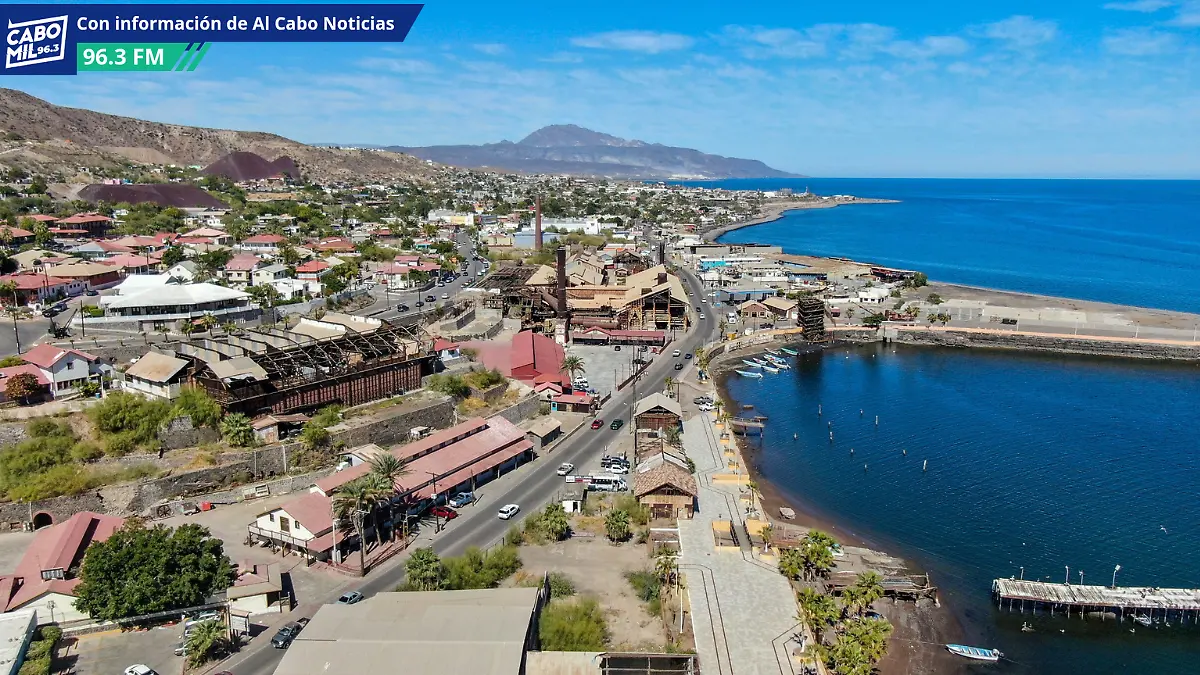
Further north is Santa Rosalía, a famous French-style town where time seems to have stopped. It has attractions such as:
Mine Museum
Santa Bárbara Church
El Boleo Bakery and its bakery
Three Virgins Volcano
Ecotourism is available, from hiking to enjoy nature, such as seeing bighorn sheep, to observing the night sky.
If you pass the Heroica Mulegé body of water, arriving in San Ignacio, there is an oasis where you can kayak or simply swim. This place is surrounded by date palms. Incidentally, its date bread is famous for its flavor.
San Ignacio is also famous for its lagoon, one of the most important whale-watching spots in the world and the second place with the most gray whales in Baja California Sur, says Jesús Ordóñez.
“And going a little further up, there’s Vizcaíno, which is the entry point for the beautiful North Pacific region, where we have Punta Abreojos, La Bocana, Bahía Asunción, Bahía Tortugas, Punta Eugenia, and Isla Natividad,” says Ordóñez.
Guerrero Negro, like San Ignacio, is a whale-watching spot. Its lagoon, called Ojo de Liebre, is the most important whale sanctuary in Mexico.
Speaking of beaches, between Loreto and the Heroica Mulegé, there’s Bahía Concepción, where there are beautiful, shallow beaches. There are several islands here that can be reached by booking a tour, says the General Director of the Baja California Sur Tourism Promotion Trust.
Another attraction is getting to Mulegé. From Los Cabos, the option is by road. From the Cabo municipality to La Paz, it takes two hours; from La Paz, another two hours to Ciudad Constitución, Comondú; from Ciudad Constitución, another two hours to Loreto; from Loreto, an hour and a half to the Heroic Mulegé. From there, the journey to the next community takes approximately one and a half to two hours, says Jesús Ordóñez.
Source: oem