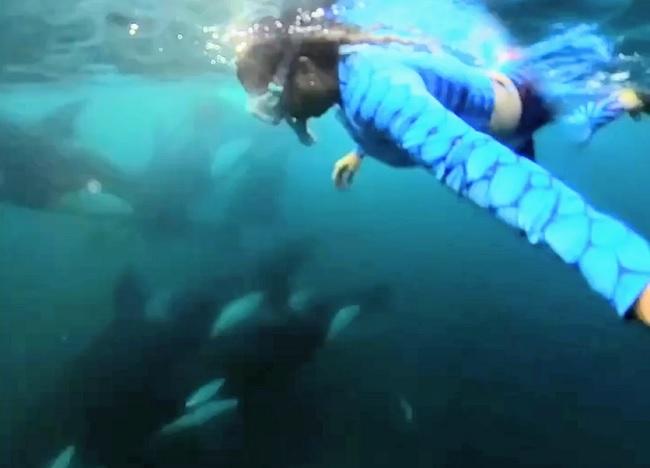

LA PAZ, BAJA CALIFORNIA — Rapidly growing viral popularity around swimming with wild orcas off Mexico’s Pacific coast has prompted environmental authorities and state officials to implement strict regulatory frameworks, replacing previously unchecked tours with tightly enforced conservation protocols.
For years, in-water encounters with killer whales occupied a legal gray area in Mexico. While federal law fully prohibits swimming with baleen and sperm whales, orcas—members of the oceanic dolphin family—lacked explicit interaction guidelines. As social media videos fueled a massive boom in ocean safaris off Baja California Sur, unpermitted spotter planes, speeding vessels, and crowding in the water raised urgent concerns among marine biologists regarding animal distress, echolocation disruption, and swimmer safety.
To curb unregulated operations, Mexico’s Secretariat of Environment and Natural Resources (SEMARNAT), in coordination with state authorities, launched a comprehensive Model Management Plan for Orca Conservation. The regulations formally restrict orca swimming expeditions to designated marine zones, primarily around La Ventana and the Cerralvo Channel near La Paz, while rendering unpermitted encounters elsewhere strictly illegal.
Under the new operational guidelines, vessel counts are capped, and tour operators must secure specialized environmental permits. In-water interactions are restricted to small groups of up to four swimmers accompanied by a certified guide, with a strict 30-minute time limit. Furthermore, swimming is permitted only when orcas display calm social or feeding behaviors; boats must retreat immediately if animals exhibit signs of stress, hunting, or resting. Drones, flash photography, and physical contact remain prohibited.
While wild orca encounters elsewhere in Mexico are now strictly restricted or prohibited, authorized, conservation-first eco-tours operate under these new guidelines in La Ventana. Industry leaders emphasize that the framework sets a national precedent, shifting wildlife tourism from high-pressure photo opportunities to regulated, respectful encounters that prioritize animal welfare.
Based on the editorial by Alyssa Ramos on Yahoo Creators