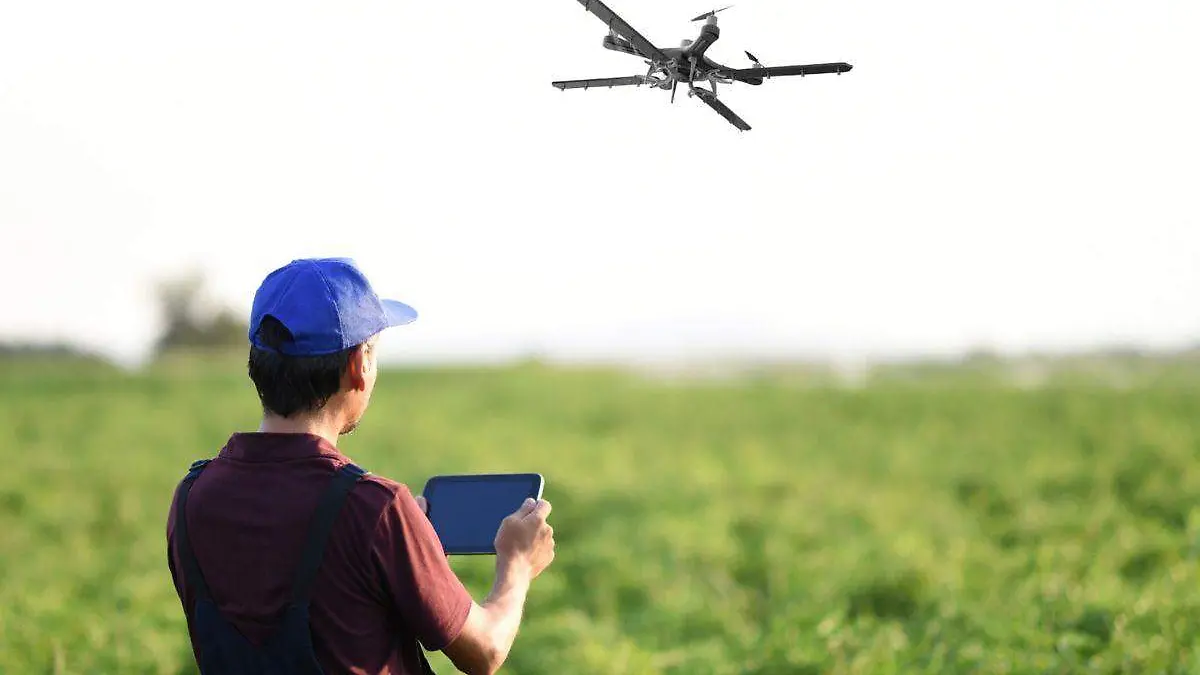
The use of drones has become a tool for environmental conservation, allowing for detailed monitoring of ecosystems and species without interfering with their natural habitat. Thanks to their ability to capture high-resolution aerial images and access difficult areas, these devices facilitate the collection of accurate data that supports decision-making for ecological protection and restoration.
Today, technological advances have opened up new possibilities for biodiversity conservation. One of the most innovative and effective tools is the use of drones, or unmanned aerial vehicles, which have revolutionized the way ecosystems are monitored and studied.
Thanks to their ability to capture high-resolution aerial images and navigate difficult-to-access terrain, drones allow scientists and specialists to observe changes in the landscape, study wildlife populations, and detect environmental threats accurately and in a timely manner, all with minimal impact on the natural environment.
In this regard, Tadeo Martínez Chavarría, a Marine Biology student at the Autonomous University of Baja California Sur (UABCS), points out that the use of drones represents a valuable tool for conservation studies, not only due to their efficiency in data collection, but also due to their low operating cost and the ability to generate useful information for decision-making in the field.
The young university student explains that these devices have proven to be especially useful for monitoring species in their natural habitat, without interfering with their behavior, as well as for identifying changes in vegetation cover, the quality of water bodies, and delimiting priority areas for ecological restoration. He emphasizes that their use provides a comprehensive view of the conservation status of different areas, which would be more complex to achieve using traditional methods.
He recognizes the work of organizations, collectives, and research groups that have incorporated this technology into their environmental projects, such as CAMARC, an initiative that uses drones to collect data in key ecosystem areas, contributing to the design of more effective conservation strategies.
Furthermore, Martínez Chavarría emphasizes the importance of those interested in applying these types of tools doing so ethically and in accordance with current regulations, always promoting respect for biodiversity and the well-being of species.
“The use of drones allows us to see beyond the obvious, generate useful data, and make better decisions in conservation work. But it also entails great responsibility. Technology is an ally, as long as it is used with awareness and commitment,” he concluded.
Source: oem