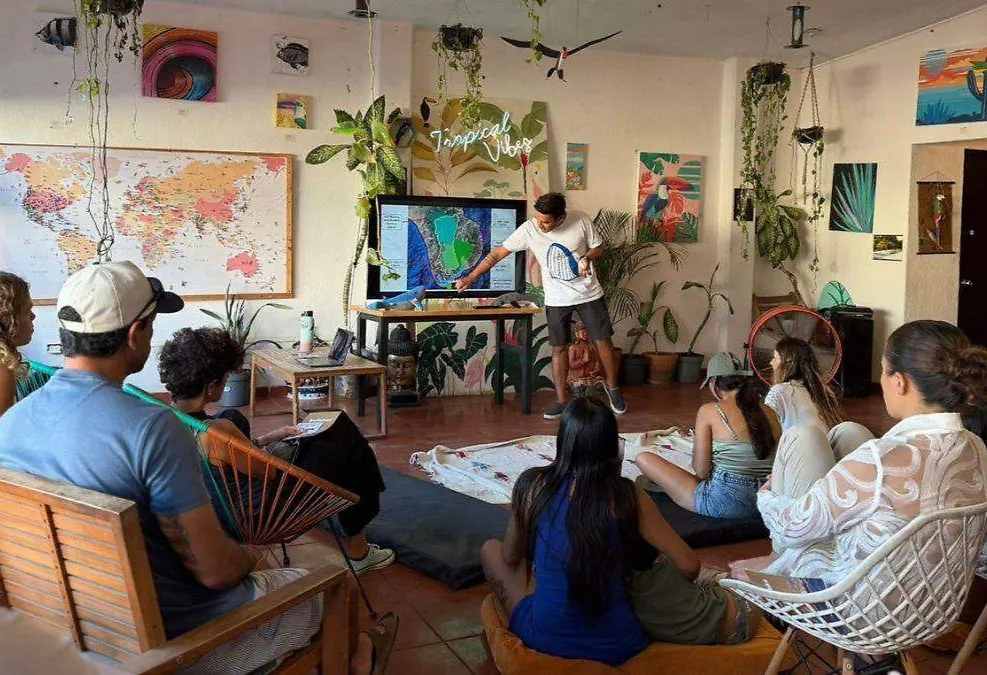

On Sunday, May 17, environmental organizations, activists, and service providers in Los Cabos carried out outreach activities and documentary screenings to raise awareness regarding the potential environmental impacts associated with the Internal Combustion Power Plant project slated for construction in Cabo San Lucas; they also gathered signatures to support claims regarding inconsistencies detected in the project’s documentation.
Abraham Valdez—a biologist and provider of specialized nature-based tourism services—explained that the initiative aims to provide information to the public and encourage their participation in the public consultation process.
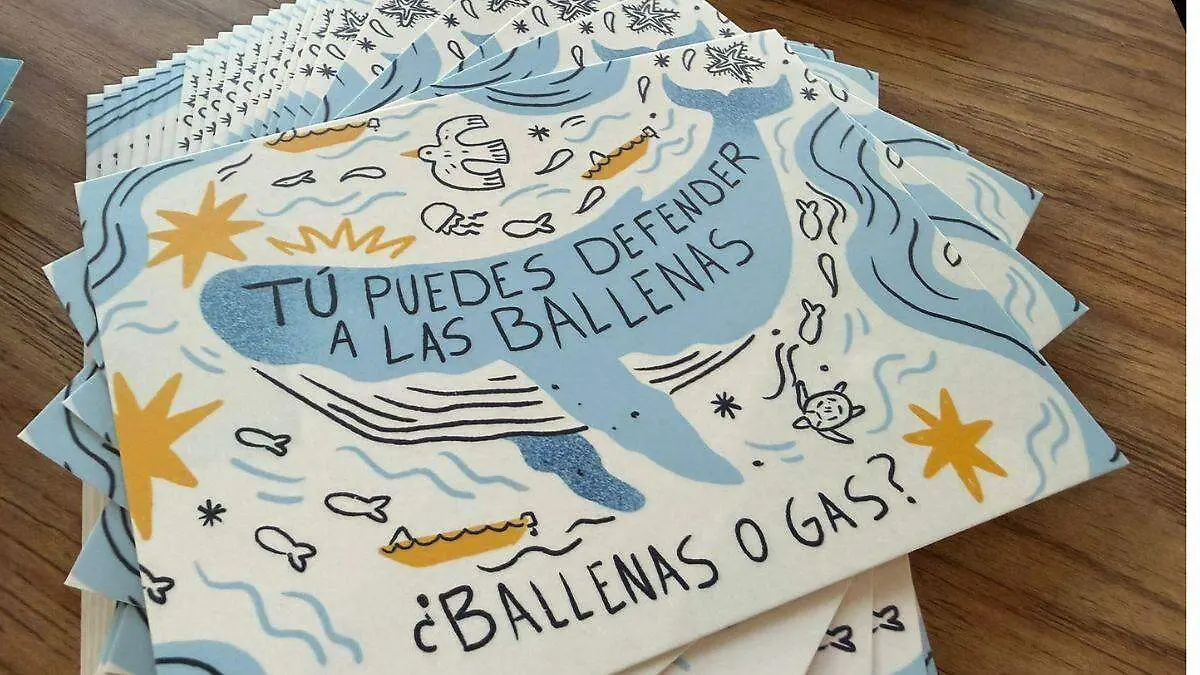
“We are hosting a screening of documentaries from the ‘Whales or Gas?’ campaign, which we are promoting nationwide to provide information on various projects.”
He detailed that the energy project also entails other complementary infrastructure works, including a 150-kilometer gas pipeline, a gas turbine power plant, and a regasification terminal.
“Specifically here in Los Cabos, our goal is to disseminate information and invite people to participate in the public consultation regarding the Internal Combustion Power Plant project—which is intended for construction in Cabo San Lucas—along with three other associated infrastructure works.”
The specialist noted that one of the primary concerns of the “Whales or Gas?” movement is the potential impact on whales and other marine species, which constitute an integral part of the natural and economic identity of the Gulf of California.
Valdez asserted that the growth of cetacean-watching tourism has yielded significant benefits for Los Cabos; consequently, the group deems it essential to carefully evaluate the potential effects of industrial projects on the local marine environment. Furthermore, he issued a warning regarding potential consequences linked to increased maritime traffic and the continued reliance on fossil fuels.
“The continued consumption of fossil fuels for energy generation—and the impact this has at both global and local levels, particularly regarding the climate crisis—only serves to exacerbate the problem.”
Proposing an Energy Transition Based on Renewables
While acknowledging the growing demand for energy within the municipality of Los Cabos, Abraham Valdez argued that current energy alternatives continue to rely on environmentally harmful models. “It is true that we need a transition and a way to generate energy; the problem is that we continue to opt for the same traditional choices that rely on fossil fuels,” he said.
The biologist asserted that Baja California Sur possesses ideal conditions for the development of clean energy, noting that various civil society groups are already working on proposals and research regarding this issue.
Among the participating organizations, he mentioned Conexiones Climáticas, Nuestro Futuro BCS, BCSicletos, and La Ecolectiva. He emphasized that the movement does not seek to halt the region’s economic growth, but rather to promote sustainable projects.
“We are not looking to halt development; we want a form of development that truly benefits us all—one that has a positive and technological impact.” It is worth noting that SEMARNAT’s public consultation process—through which citizens may submit comments and observations regarding the project—will remain open until May 26.
Source: oem