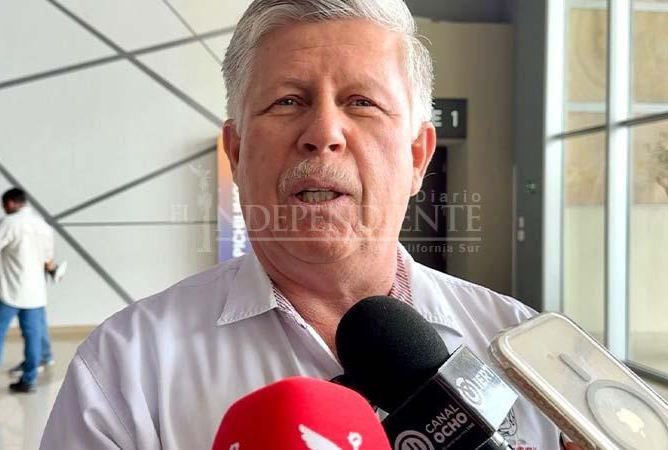

Baja California Sur (BCS) remains free of the cattle screwworm fly, assured the Secretary of Fisheries, Aquaculture, and Agricultural Development (SEPADA), José Alfredo Bermúdez Beltrán, who reported that since the first case was detected in Chiapas in November 2014, preventative measures have been in place to prevent the pest from entering the state.
The official explained that, following the issuance of the National Emergency Plan by federal health authorities, all states reinforced their animal health controls, while in Baja California Sur, constant surveillance is maintained at the main points of entry, such as airports and the Guerrero Negro area.
“We are free of the fly and are working very hard in a working group that includes Senasica (National Service for Agrifood Health, Safety and Quality), the Mexican-American Commission for the Prevention of Exotic Diseases, Sader (Ministry of Agriculture and Rural Development), and Sepada, as well as the Livestock Development and Protection Committee made up of producers,” he stated.
Bermúdez Beltrán reported that during the first week of June, specialized training and a simulation exercise will be conducted to prepare technicians and authorities on the protocols to follow should the screwworm fly be detected in the state.
He emphasized that the pest represents a significant health and economic risk, since the presence of the fly restricts livestock movement, directly impacting the sale of animals.
Regarding the resources allocated for prevention, he indicated that the Livestock Development and Protection Committee has already received 12 million pesos from the Federal Government and is about to receive another 4 million pesos from the State Government to strengthen health campaigns.
He added that, should a contingency arise, additional resources would need to be allocated.
The secretary highlighted that the economic impact of the screwworm fly has been severe for the national livestock sector due to the suspension of live cattle exports to the United States.
He explained that annual exports are around 1.2 million head of cattle and that, following the suspension last year, approximately 600,000 calves had to be sold on the domestic market at lower prices, resulting in estimated losses of up to $300 per animal for exporting producers.
He also warned that the main challenge in containing the pest is the fly’s ability to travel, as it can cover up to 300 kilometers in just a few days. This situation necessitates constant vigilance, especially during hurricane season.
“The screwworm fly is already present in Nayarit. A hurricane with strong winds could carry specimens and create a serious problem,” he cautioned.
Finally, he noted that Baja California Sur, Baja California, Chihuahua, and Coahuila remain free of the pest. Although Baja California Sur does not export cattle directly to the United States, it does transport animals to Mexicali and Hermosillo, so a potential detection of the fly would complicate the transport and sale of the product.

Source: diarioelindependiente