Coastal fishermen, recreational fishermen, aquaculturists, and nautical tourism service providers, grouped together in the Sustainable Fisheries Development (DEPESCA) civil association, are proposing the creation of the Dos Mares Biosphere Reserve on the coast of Baja California Sur, which would be the largest in the country.
The association is seeking the issuance of a decree by President Claudia Sheinbaum Pardo to prohibit foreign industrial fishing in a maritime area of 19.2 million hectares around the state’s coasts bordering the Gulf of California and the Pacific Ocean.
“The main objective is to have a legal tool that keeps out industrial vessels from other states and protects the customs and practices of more than eight thousand artisanal fishermen and their families,” the association stated. It added that the project also seeks to definitively prevent deep-sea mining in the Gulf of Ulloa and regulate mass nautical tourism.
He noted that for more than 30 years, coastal fishermen in Baja California Sur have denounced the devastation caused by industrial vessels originating primarily from Sonora, Sinaloa, and Baja California. “A shrimp boat, for example, can extract in a single haul what would take an entire community a year to capture.
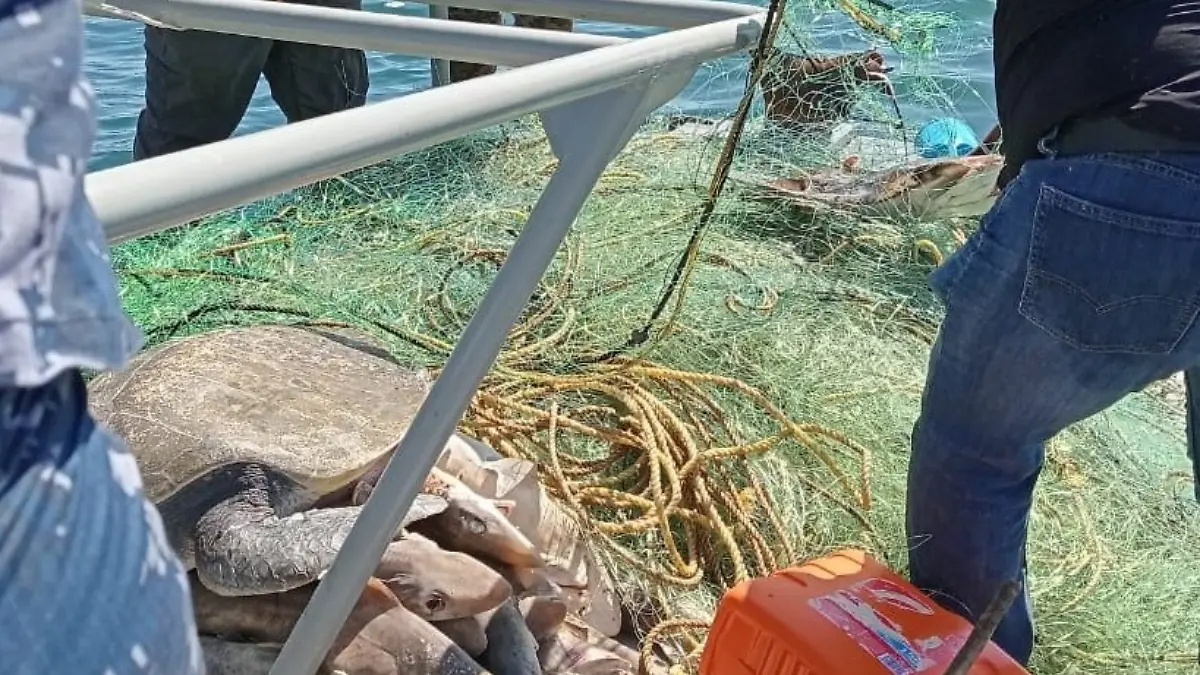
“For every kilo of shrimp, an industrial vessel discards up to nine kilos of other species known as accompanying fauna, including dolphins, sharks, and even sea lions,” the association denounced.
It pointed out that the project already has the support of more than 500 allies throughout the state, representing more than four thousand families, including cooperatives and permit holders of commercial, sport, aquaculture, and tourism fishing.
Nora Torres, advisor to the DEPESCA group, explained that work continues on the project’s dissemination process among coastal fishermen. She said that it was also presented to the governor of Baja California Sur, Víctor Manuel Castro Cosío, in May, and is already known to the National Commission of Natural Protected Areas (CONANP) and Semarnat, federal agencies that are analyzing and reporting on it. Review.
He explained that as part of the process to complete the presidential decree, CONANP must publish a preliminary supporting study in the Official Gazette of the Federation and open the public consultation process, which has not happened and no date has been set.
DEPESCA pointed out that Baja California Sur accounts for more than 60% of Mexico’s fisheries; furthermore, up to 40% of the fish and seafood consumed in the country comes from artisanal fishing.
He argued that the biosphere reserve is the only legal tool that protects both marine biodiversity and local communities, and is therefore a social justice project that continues to move forward.
The proposal for the new reserve includes two relevant zones: a buffer zone with 100,000 square kilometers of marine area, where coastal fishing, sport fishing, and tourism activities would be permitted, as well as a core zone with an area of approximately 90,000 square kilometers, where extractive activities would not be permitted.
“The core zone would be a an area dedicated to the conservation and focused on the protection of key ecosystems for pelagic species such as whales, dolphins, sharks, tuna, billfish (swordfish, sailfish, marlin), sea turtles, giant Pacific manta rays, and also various species of sardines, which are the food staples of many of the aforementioned species.”
The group explained that the project would promote greater equity in access to marine resources for coastal fleets, due to the fact that the core zone will produce increases in biomass and spillover effects toward the buffer zone, where they can be legally captured.
DEPESCA reported that according to estimates by the Colegio de México, the new ANP would increase production by 20.24% in the coastal fishing sector and demand for ecotourism by 42.87%.
Consequently, Baja California Sur’s Gross Domestic Product (GDP) would increase by 4.28%; The average real wage was 8.04%; the return on capital was 9.5%; and the real income (well-being) of the BCS economy was 7.68%.
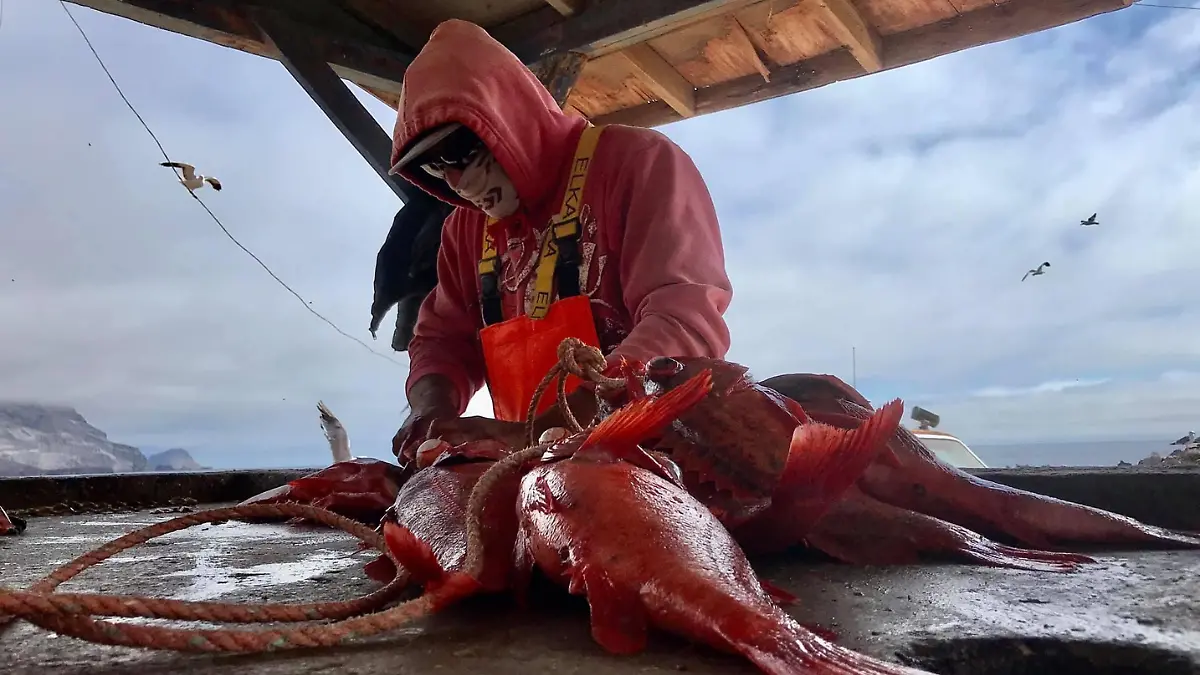
Wendy Higuera, DEPESCA representative in Puerto Adolfo López Mateos and a coastal fishing specialist, pointed out that Baja California Sur has suffered for many years from the depredation of its seas by foreign industrial fishing.
“Shrimp boats, longliners, tuna boats, and sardine boats come and depredate our coasts, and this directly affects us fishermen.” She explained that the initiative is being made known to all fishermen and permit holders in the South California seas so they can join, because it is for their benefit.
She specified that the proposal includes a 19.2 million hectare strip around Baja California Sur, divided into 10.4 million hectares of buffer zone and 8.8 million hectares of core zone.
That is, the buffer zone polygon would extend from the coastline to 35 nautical miles, and the core zone from 36 to 50 nautical miles would be the core zone.
Within this 50-nautical-mile zone, the activity of large fishing vessels from other states would be prohibited, but it would not affect the sardine boats based in the ports of San Carlos and Adolfo López Mateos.
Glenn Bercovich, president of the Union of Sport Fishing Boat Owners of Los Cabos, noted that in a month of activity, a shrimp boat wastes up to 180 tons of accompanying wildlife.
The problem, he warned, is that it’s not just one boat, but a fleet of 100 or more vessels from other states that may be operating off the coast of Southern California, just a few miles from the shore.
He noted that the legislators and authorities are fully aware of what’s going on, but there are many high-powered individuals who manage fleets and are doing it their way.
He explained that “Conapesca is unable to handle this situation,” and that coastal fishermen and sport fishing permit holders are suffering the consequences of the fishing boats that “come and take all the billfish, and there is no power or authority to stop it,” he asserted.
Source: oem